Ph.D. in Education and Social Change
Ready to Make a Bigger Impact?
Program Overview
At Bellarmine, the Ph.D. in Education and Social Change prepares highly skilled professionals to become change agents focused on improving learning, access, and outcomes for children, adults, and communities facing complex challenges. Graduates are equipped to lead across a wide range of education-related settings, including nonprofit organizations, family advocacy, public and private education, teacher preparation, policy, research, and community-based environments.
Through advanced study in quantitative and qualitative research, innovation, leadership, and change management, students gain the knowledge to evaluate systems, develop solutions, and create meaningful impact in their chosen area of study.
This is an online program, but students come together on Bellarmine’s campus each summer for a four-day intensive experience focused on learning, connection, and community. Through in-person learning experiences, faculty engagement, cohort activities, cross-cohort networking, and social events, students deepen their connection to the program and build relationships that support them throughout their doctoral journey.
READ MORE: Why get a Ph.D. in Education?
For professionals specifically interested in leadership within colleges, universities, and postsecondary institutions, Bellarmine also offers a Ph.D. in Higher Education Leadership.
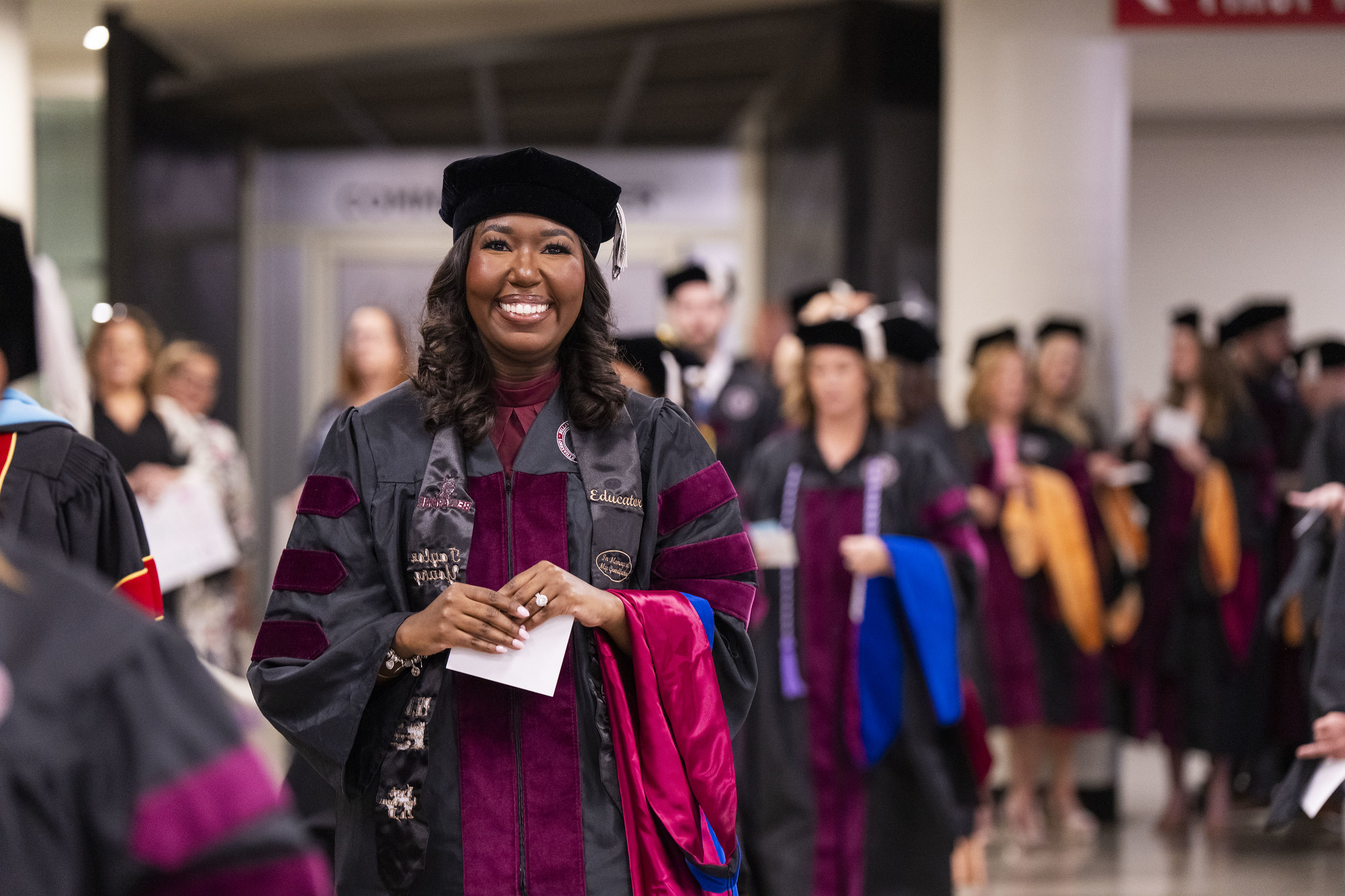

Cohort Model Built for Working Professionals
This cohort-based, 60-credit-hour Ph.D. program is designed for working professionals and delivered primarily online through asynchronous coursework, supplemented by limited online synchronous class meetings. Each summer, students also participate in a four-day, on-campus intensive designed to deepen learning, build relationships with faculty and peers, and foster connection across cohorts.
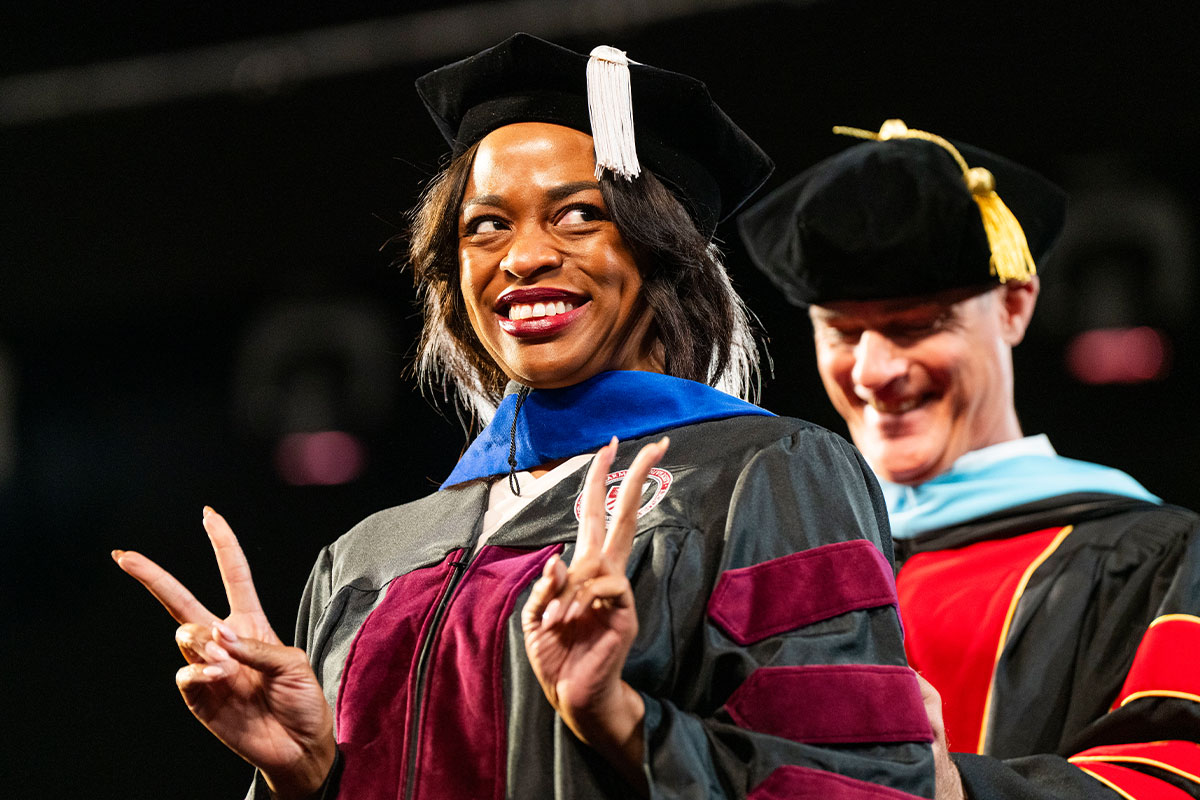
Research-Driven Leadership for Social Change
Students work in teams alongside top scholars to seek, replicate, develop, and explore research-based innovations for improving learning. Concentration options include Literacy Education, Educational Leadership, Superintendent Focus, and Higher Education Administration.
Schedule Appointment60
Credit Hours
Cohort
Online
4 Years
Typical Completion
Program Highlights
The Ph.D. in Education and Social Change is an affordable 60-hour, cohort-based program attracting students because of its focus on individual dignity rooted in the Catholic tradition and research-driven structure.
In the course of study, students work in teams alongside top scholars to seek, replicate, develop, and explore research-based innovations for improving learning for the underprivileged. Most candidates complete their dissertation and graduate within a four-year timeframe.
For those serving in education-related fields outside of P-12 schools, the ideal candidate will usually hold the equivalent of an undergraduate and graduate degree in their field, and while a more broadly based background related to the education enterprise and social programs (for example, communications, nonprofit leadership, education policy, and similar fields) is preferred, it is not required.
Courses are delivered primarily asynchronously, allowing students to engage with coursework on a flexible schedule. Each course includes a one-hour virtual meeting in the first week of the term and three two-hour virtual meetings throughout the semester. Students also participate in an annual four-day, on-campus intensive each summer.
Program Objectives
- Examine education issues associated with poverty within a perspective of individual dignity
- Evaluate change theories and practices aimed at improving education access and outcomes for all people
- Evaluate secondary research and formulate an original argument; then design, implement, analyze, and disseminate an empirical research study
- Develop and implement interventions informed by theory and empirical evidence for the purpose of promoting positive change
Admission Requirements
1. A minimum grade point average of 3.0 in all graduate coursework completed at the time of application.
2. Candidates must have an earned baccalaureate and master's degree in any discipline. Advanced degrees in fields other than education will be considered to meet this requirement (e.g., JD, MBA, etc.). A minimum grade point average of 3.0 in all graduate coursework completed at the time of application.
3. Provide email addresses in the online form for two references. Recommendations should be from individuals who are former professors or who have supervised the applicant in a school setting. One recommendation must come from the applicant’s current immediate supervisor. All recommendations must be related to the professional environment.
4. Graduate Record Examination (GRE) scores are an optional item. In lieu of GRE scores for review, applicants will be reviewed for completion of a graduate-level research course within the past five years with an earned grade of “A.” Other significant academic papers or artifacts may be requested for review.
5. A current résumé
6. Submission of two essays, no more than 1000 words each addressing the following questions:
-
What new knowledge and skills do you expect to acquire from the Ph.D. in Education and Social Change program?
-
In what ways might you serve as a change agent in your career as a graduate of this program?
7. Final official transcript(s) from each college or university attended should be mailed to the Office of Graduate Admission and should not be marked “Issued to Student.” If any transcript(s) or undergraduate degree(s) is from an international institution, you must provide an official copy to be evaluated by the Bellarmine International Programs Office. The Office of Graduate Admission reserves the right to request a certified copy of the original transcript(s).
8. A successful interview.
Curriculum and Resources
Frequently Asked Questions
Q. How would this program benefit me in the workplace?
The mission of the Bellarmine Ph.D. in Education and Social Change, consistent with
Catholic teachings, is to prepare “change agents” who improve education for children
and other citizens experiencing difficult circumstances. The principles of change
management can be applied to any environment. Whether you are employed in the public
or private P-12 school system, a nonprofit or higher education institution, the Ph.D.
in Education and Social Change will teach you how to lead and initiate change in your
organization for children and adults in high poverty circumstances.
Q. When does the program start?
The cohort typically begins in August.
Q. When and how do classes meet?
Most coursework is completed asynchronously. Each course meets virtually via Microsoft
Teams for one hour during the first week of the term and for three two-hour sessions
throughout the semester. In addition, students attend a four-day, on-campus intensive
each summer.
Q. How much time would I need to spend outside of class to be prepared for class?
On average, we recommend three hours outside of class time to prepare for each hour
of instruction. However, this will vary with the content of the course or courses
you are taking each semester.
Q. Would I be eligible for any financial assistance?
Yes. You will want to file the FAFSA and apply for federal loans at www.fafsa.ed.gov.
Graduate students are eligible for loans in the amount of $20,500 each academic year
while enrolled.
Q. Are there any graduate assistantship or fellowship opportunities available?
No. Bellarmine University does not currently offer graduate assistantship/fellowship
opportunities.
Faculty
| Name | Title | |
|---|---|---|
| James Archibald | Chair of Higher Education Leadership, Professor of Higher Education | jarchibald@bellarmine.edu |
| Jung Colen | Associate Professor of Mathematics Education | jcolen@bellarmine.edu |
| Elizabeth Dinkins | Dean, School of Education | edinkins@bellarmine.edu |
| Grant Smith | Professor of Statistics | gsmith@bellarmine.edu |
| Jess Smith | Chair of Doctoral Programs in Education, Assistant Professor of Literacy Education | jsmith89@bellarmine.edu |
| Will Wells | Assistant Professor | wwells@bellarmine.edu |
| Winn Wheeler | Chair of Initial Certification Programs, Associate Professor of Literacy Education |
Contact
Admissions
admissions@bellarmine.edu
(502) 272-7100
Take Your Next Step
Start your Bellarmine story. Request information today.
Request InformationCome to campus and see what Bellarmine hospitality is all about.
Schedule Your Visit